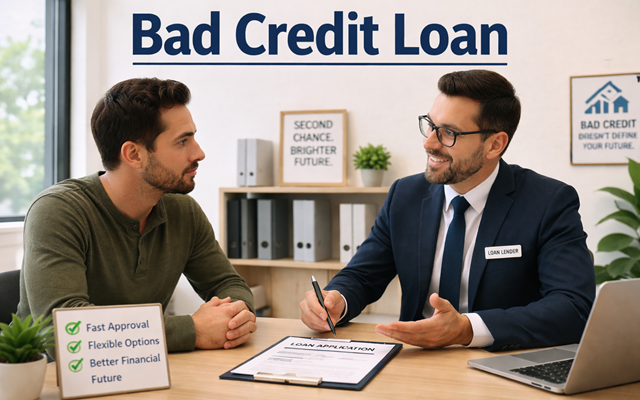
Bad credit loans are financial products designed to help subprime borrowers who are in need of money during financial emergencies. Unexpected expenses never inform beforehand before they start haunting you. Many people stow away money for a rainy day, and yet they find it insufficient when unforeseen expenses crop up.
Bad credit loans are not a specific type of loan. They are rather personal loans aimed at poor credit borrowers. Therefore, they are called by this name. Instant loans, payday loans, cash loans, and unsecured loans are also known as bad credit loans, as direct lenders accept applications from people with less-than-perfect credit histories.
Features of poor credit loans include:
• You can borrow as little as £100 and as high as £5,000, depending on a lender’s policy and creditworthiness.
• It is easy to secure a small loan. Lenders can easily sign off on £1,000.
• If the loan is not above £500, this will be discharged in one fell swoop.
• Big loans are paid down in fixed instalments.
• Lump-sum poor credit loans cannot help ameliorate your credit score, but larger loans can.
• Bad credit loans charge high interest rates.
You will be considered a bad credit borrower if your credit score is less than fair.
| Experian | Equifax | TransUnion |
| 0-640 | 0-580 | 0-565 |
It is unlikely that your score is worse by one credit bureau and good by another. However, lenders employ their own methods to determine your credit score. They make the lending decision based on their calculation of your credit rating. It is likely that, according to their methods, you are a riskier borrower, although you are not, according to reports by credit reference agencies.
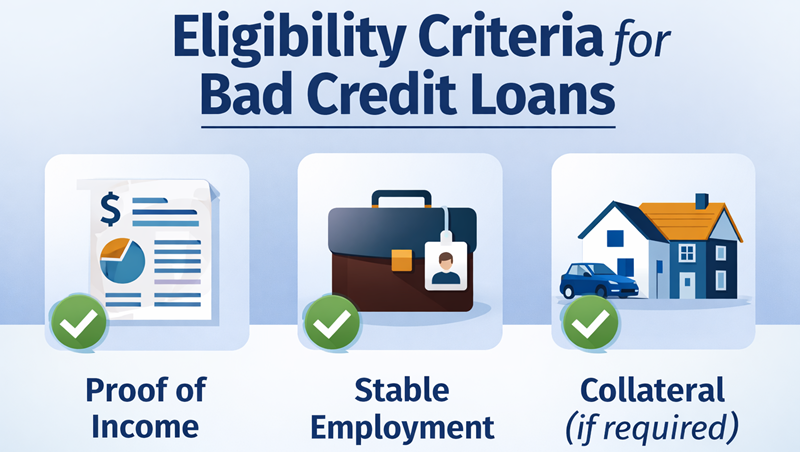
The eligibility criteria for bad credit loans
Qualifying for a bad credit loan from a direct lender is not difficult. They emphasise your repayment capacity rather than your credit history. Direct lenders are known for giving a chance to people to borrow money who have been refused elsewhere and are in urgent need of money. Here is what you need to apply for bad credit loans:
• You should try demonstrating solid proof of income. A lender would be willing to observe whether you are able to manage the additional burden of outgoings. If somehow it is suspected that you will struggle with your essential expenses, they will repudiate your application. In order to increase your income, you should have a side gig.
• You should be a resident of the UK. Make sure to have your name on the electoral roll. Otherwise, no lender can give the nod to your application. Bear in mind you will harm your chances of being qualified if you keep changing your residential addresses within a space of short time.
• Underage people are prohibited from borrowing money. Every lender will verify whether you have come of age.
• While your credit history is not the be-all and end-all, most lenders will not overlook the necessity of reviewing your credit report. They need to collect information from your credit report to determine how risky you are. This influences the loan size, repayment terms and above all, approval rates. For instance, if you had a CCJ, you would be refused.
Approval data for 2026
The demand for unsecured loans with bad credit is rapidly increasing. The average approval rate for these loans is about 75%, especially if the borrowed sum is not more than £1,000. However, the approval rate for larger bad credit unsecured loans is about 45%, which is up by 5% as compared to 2025.
The loan amount typically ranges between £500 and £5,000. In recent years, the demand for a higher loan amount has increased, too. The majority of people prefer between £2,000 and £3,000, and more than 50% of applicants have been able to get approval successfully.
Interest rates and APRs have also been revised. There is no doubt that bad credit loans are expensive. Average interest rates range between 24% and 49%. As compared to the previous decade, they have increased by 5%. Since the APR includes fees and charges that are not the same across the board, the total cost of the debt from some lenders could go beyond 100%. For small loans which do not exceed £500, this is as high as 1200%, making these loans still one of the most expensive funding sources.
Lenders are constantly revising their approval criteria. They are advancing their algorithms to shortlist applications to maintain transparency and lower the risk of default. This has improved lending by 60%.
Ways to increase your approval chances
You cannot throw caution to the wind at the time of taking out an unsecured loan with bad credit:
• Although your repayment capacity plays a pivotal role, you still ensure that your credit score is not lower than the bare minimum approval criteria. Lenders generally do not entertain applications from borrowers with very poor credit.
• If you already have short-term high-cost debts, you will struggle with getting it signed off on, as this will raise questions on your ability to manage it along with other essentials such as groceries, commute, utilities and the like.
• You can demonstrate income stability by having a side gig and by adhering to the same employment for a long time. Have a record of your income through payslips and bank statements.
• In order to get a large amount approved, you may need to arrange collateral. Most lenders will generally prefer a co-applicant or a guarantor because bad credit loans are unsecured in nature.
To wrap up
Bad credit loans will always be in high demand. Over time, lenders have also strengthened their approval criteria so they do not lose their money, and borrowers do not end up getting stuck in a debt cycle.
Although subprime loans are convenient, it is always suggested that you improve your overall credit profile.
Frequently Asked Questions (FAQs)
Will a bad credit loan improve my credit score?
Yes, if managed responsibly. Your credit rating can be rebuilt by making all payments on time and reporting them to credit reference agencies.
What is a “soft search” in 2026?
A ‘check your eligibility’ service is being offered by many lenders to determine your eligibility through a soft credit check without leaving any marks on your file. Only formal applications require a hard check.
What is the difference between a bad credit loan and a payday loan?
Bad credit loans tend to have longer repayment terms and lower APRs than payday loans. Payday loans are short-term and can have APRs as high as 1,500%, which makes them more expensive in the future.
What should I do if I’m rejected?
Don’t apply to other places immediately, as multiple hard searches will further damage your score. Check your credit report, ensure that you are on the electoral roll, and consider credit-builder credit cards or credit unions.
What is classed as a bad credit score in the UK?
If your credit score is poor in the UK, lenders may view you as a higher-risk borrower and therefore increase interest rates, decrease credit limits, or deny your applications. It typically means a score below 640–720 depending on the agency, often referred to as “poor” or “very poor”.

Anna Johnson has more than 11 years of experience in direct lending industry of the UK. She is the Senior Content Editor at 24cashflow where she is leading a large team of loan experts. During her career, she has helped the loan aspirants to use the particular loans in the best way and improve their financial lives and status.
Anna Johnson is known for her in-depth research of the UK loan marketplace, as she has worked with many major lending firms in her career. During her educational phase, she has done a research on ‘Finance Fundamentals for Growing Business’.