
Getting a loan with bad credit and no guarantor may feel impossible. But many direct lenders have built their whole service around people in your position. The specialist providers can approve applications that most other lenders will not even consider.
You can also access a debt consolidation loan for bad credit from a direct lender through the same process, if you want to combine existing payments into one.
Step-by-Step Application
The process will assist you in getting settled without ruining your credit rating.
● Step 1: Check your credit score. You can get this completely free from Experian, Equifax or ClearScore. There is no need to subscribe to any paid trial.
● Step 2: Take the precise sum you require, and just how much you can afford to pay each month. Do not round this number up or down.
● Step 3: Research specialist bad credit direct lenders. Do not use a high street bank. They will automatically turn down anybody who has bad credit.
● Step 4: Compare rates and complete terms of at least three lenders in terms of APR. The initial rate you see is hardly the rate you are going to be charged, and ensure that you are looking at the actual representative rate for people with your credit score.
● Step 5: Gather all your required documents before you start any application. You will need proof of ID, your last three months’ bank statements, and proof of your income.
● Step 6: Complete pre-qualification checks only first. Pre-qualification runs a soft search on your credit file that no other lender can see, and will not lower your credit score at all.
● Step 7: Submit your formal application with accurate information. Do not exaggerate your income or round down your expenses. Lenders will check every single number.
● Step 8: Give any other documentation. You can submit within 2 hours to get a same-day decision.
● Step 9: Carefully read the entire loan agreement before signing. Look out for any late or early repayment fees.
Best Loan Types For Bad Credit Borrowers
Once you know how much you want to borrow, you need to pick the right type of loan for your situation. There is a range of different options.
● Secured loans. These come with lower interest rates than any other bad credit product, but you will need to put forward an asset, such as a car or home, as collateral.
● Peer-to-peer guarantor alternative loans. These are relatively new products that work the same way as a guarantor loan, but use a network of independent guarantors rather than someone you know personally.
● Debt consolidation loans. These combine all your existing payments into one single monthly payment, almost always at a lower overall rate.
● Short-term loans. These loans for bad credit with no guarantor are for small amounts under £1500, over terms of 3 to 12 months. They have low rates and flexible terms. Plus, you don’t need any guarantor for the loan. The lenders will only consider your application and credit score.
● Hire purchase agreements. If you need to borrow money to buy a specific item, such as a car or fridge, a hire purchase agreement will almost always be easier to get approved for than a standard loan.
● Logbook loans. These use your car as security, and you can usually borrow up to 70% of the value of your vehicle. You keep and use your car for the full term of the loan.
● Online instalment loans. These are the most common and most flexible bad credit loans available. You can borrow between £500 and £15000 over terms of 1 to 7 years, and repay in fixed equal monthly payments.
| Bad Credit Factors and Impact on Loan Terms | |||
| Credit Issue | Severity | Loan Limit Impact | Approval Chance |
| CCJ (Satisfied) | Medium | -30% | Moderate |
| CCJ (Unsatisfied) | High | -60% | Low |
| Default (0-2 years) | High | -50% | Low |
| Default (3+ years) | Medium | -30% | Moderate |
| Missed Payments | Low-Medium | -20% | Good |
| Bankruptcy | Very High | -80% | Very Low |
| Thin Credit File | Medium | -40% | Moderate |
Income and Employment Requirements
All lenders will care far more about your ability to repay the loan than they will care about your past credit history. There is no universal minimum requirement, but there are consistent standards for bad-credit direct lenders.
● Most lenders have a minimum monthly income requirement between £800 and £1200 after tax.
● You will usually need to have been in your current job for at least 3 to 6 months.
● Self-employed applicants will need to provide 2 full years of accounts or self-assessment returns.
● Most lenders accept universal credit and most other state benefits as valid income.
● Private and state pension income is accepted in full.
● You can combine multiple different sources of income to meet the minimum requirement.
● You will need to provide 3 months of bank statements as evidence of all income.
● Payslips or a recent P60 will be required to confirm employment income.
One extra thing most guides don’t mention: lenders will look at the regularity of your income far more than the total amount. Someone earning £900 a month reliably every 4 weeks is far more likely to be approved than someone earning £2000 one month and £300 the next.
Common Rejection Reasons and Solutions
Even if you follow every step correctly, around 40% of bad credit loan applications are rejected. These rejections are for predictable and fixable reasons.
Most Common Rejection Reasons
● You applied for an amount that the lender decided you could not afford to repay.
● You have made more than two other credit applications in the last 30 days.
● You have changed jobs or addresses more than twice in the last 12 months.
● Your total existing monthly debt payments are more than 25% of your net income.
● You made a small mistake or typo on any part of your application form.
● You have an active bankruptcy, IVA or CCJ that is less than 12 months old.
● The lender could not verify your address from the details you provided
Simple Solutions
You wait at least 30 days before you apply if you are rejected. They will all fall off your soft search record after 28 days if you have too many recent applications. You reduce the amount you are applying for by 10% and try again if you are rejected for affordability.
The applicants who are rejected for £2000 will be approved for £1800 with the same details. You may want to check your application line-by-line. You ensure that the address on your driver’s license is an address that is identical to the one on your driver’s license.
Ways To Build Credit After Loan Approval
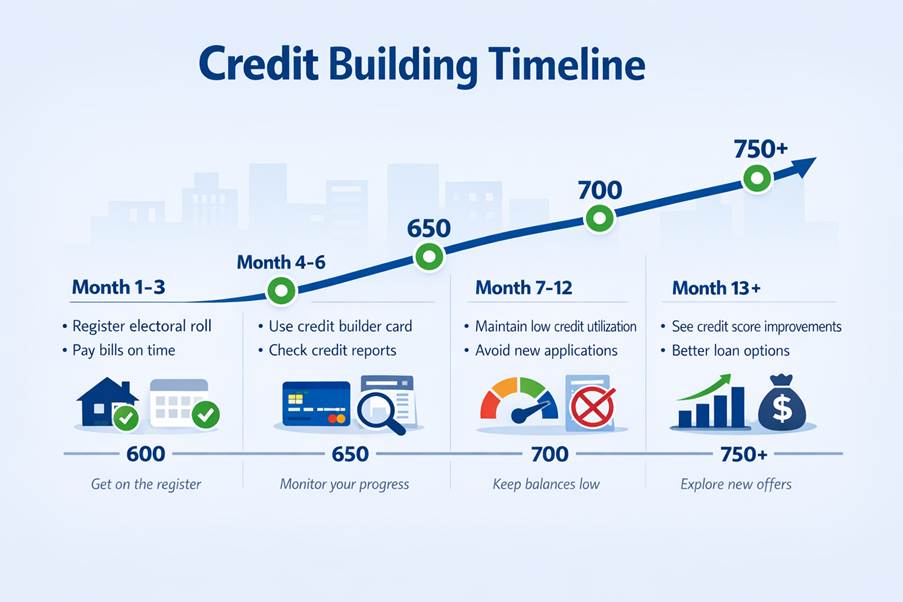
You can improve your credit score by 150 points or more if you manage this loan correctly.
● Make every single loan payment on the exact day it is due. One single late payment will undo all the progress.
● Keep the balance on all of your other credit accounts below 30% of their total limit.
● Do not close any old credit accounts you already have open, even if you do not use them.
● Do not apply for any other form of credit for the full term of your loan.
● Register on the electoral roll at your current address if you have not already. This is the single fastest way to improve your credit score.
● Use a low-limit credit builder card for small regular purchases such as milk and bread, and pay it off in full every single month.
● Check all three of your credit reports once every 3 months for any errors or incorrect entries.
● You can use a regulated credit repair service if you have old, incorrect entries on your file that you cannot remove yourself.
Conclusion
You do not have to accept unfair rates or hidden fees just because you have bad credit and no one to act as your guarantor. Take your time, compare options properly, and never borrow more than you know you can comfortably repay each month.
If you make all your payments on time, this loan will not just give you the funds you need right now. It will also help you rebuild your credit score and open up much better options.
Frequently Asked Questions (FAQs)
Can I get a loan in the UK with bad credit and no guarantor?
Yes, several UK lenders offer bad credit loans without a guarantor. Options include credit unions, specialist lenders, and secured loans. Approval depends on affordability, income stability, and your overall financial profile rather than your credit score alone.
What types of loans are available for people with bad credit?
Common options include personal loans from specialist lenders, secured loans (against property or assets), credit union loans, payday loans, and logbook loans. Each carries different interest rates and risks, so comparing them carefully before applying is strongly recommended.
Will applying for a loan damage my credit score further?
A hard credit check during a full application temporarily lowers your score. Use eligibility checkers that perform soft searches first — these don’t affect your credit file. Only proceed with a full application when you’re confident of approval to avoid unnecessary score drops.
How much can I borrow with bad credit and no guarantor in the UK?
Loan amounts typically range from £100 to £5,000 for unsecured bad credit loans. Larger amounts may be available with collateral. Lenders assess your income, existing debts, and repayment ability to determine the maximum amount they’re willing to lend you.
What interest rates should I expect with a bad credit loan?
Interest rates for bad credit loans are significantly higher than standard loans — often between 30% and 99.9% APR. Some short-term lenders charge even more. Always compare the representative APR and total repayment amount before accepting any loan offer from a lender.
Do I need to be employed to get a bad credit loan in the UK?
Not necessarily. Many lenders accept applications from self-employed individuals, those on benefits, or with irregular income. What matters most is proving you can afford repayments. Bank statements, payslips, or benefit letters are usually required as evidence of regular income.
Are there alternatives to loans for people with bad credit?
Yes. Consider credit builder credit cards, interest-free overdrafts, borrowing from family, or using a credit union. Government schemes like the Budgeting Loan (for benefit claimants) can also help. These alternatives often carry lower costs and fewer risks than specialist bad credit loans.
How can I improve my chances of loan approval with bad credit?
Check and correct errors on your credit report, register on the electoral roll, reduce existing debt, and show stable income. Applying to lenders who specialise in bad credit and using soft eligibility checks before applying also significantly improves your approval chances.
Are bad credit loans regulated in the UK?
Yes. All legitimate UK lenders must be authorised and regulated by the Financial Conduct Authority (FCA). Always verify a lender’s FCA registration on the Financial Services Register before borrowing. Avoid unregulated lenders, as they offer no consumer protection if things go wrong.
Can getting a bad credit loan help rebuild my credit score?
Yes, if managed responsibly. Making every repayment on time demonstrates financial reliability to lenders and credit reference agencies. Over time, consistent repayments on any loan or credit product will gradually improve your credit score and open access to better borrowing terms.

Anna Johnson has more than 11 years of experience in direct lending industry of the UK. She is the Senior Content Editor at 24cashflow where she is leading a large team of loan experts. During her career, she has helped the loan aspirants to use the particular loans in the best way and improve their financial lives and status.
Anna Johnson is known for her in-depth research of the UK loan marketplace, as she has worked with many major lending firms in her career. During her educational phase, she has done a research on ‘Finance Fundamentals for Growing Business’.